Online Casinos in Quebec 2026: Provincial Rules, iCAJO Confusion, and Trusted French-Language Platforms
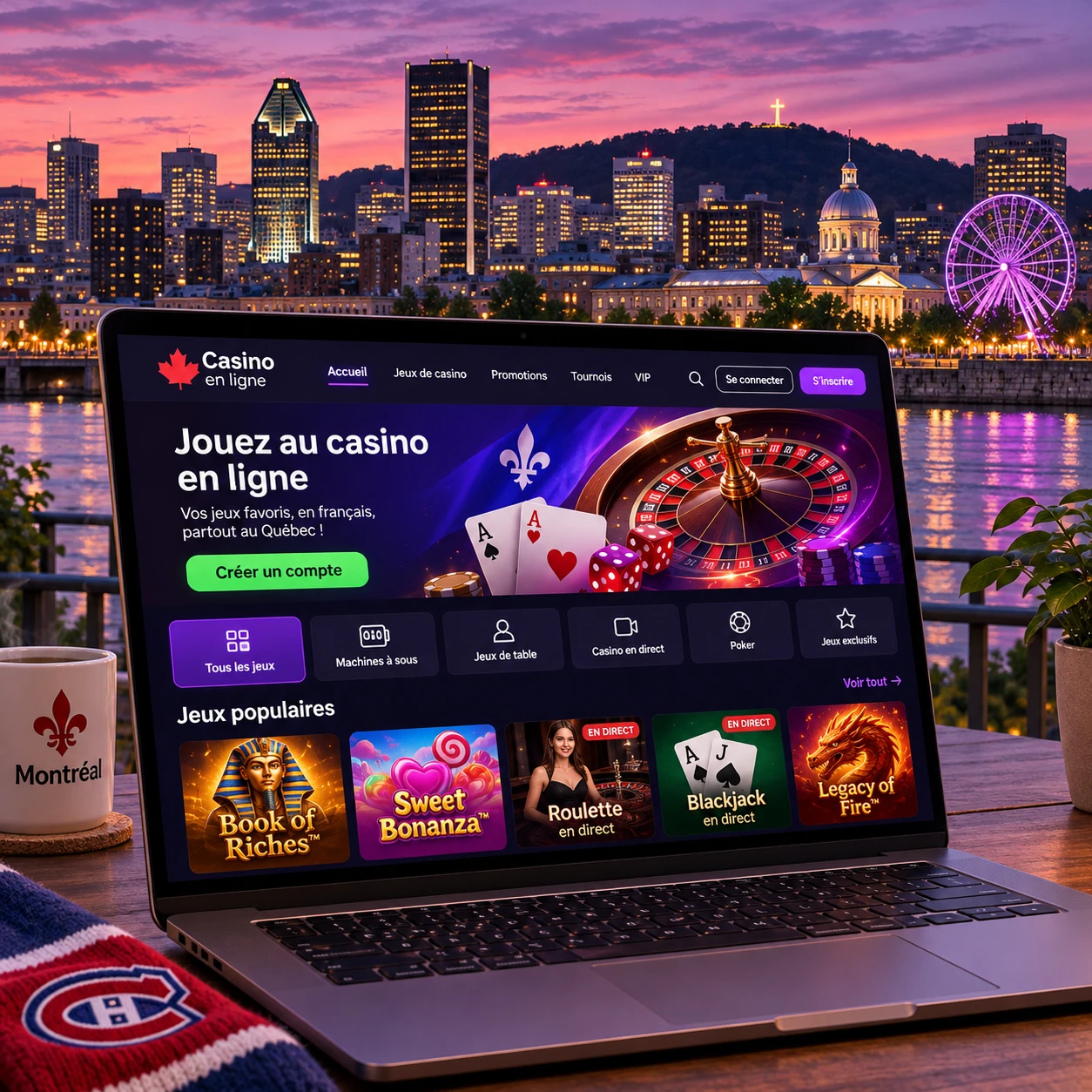
Sit down with any group of Quebec players and the same pattern surfaces. Three accounts. Four. Sometimes five. Exactly one of them is authorized by the province. That gap between what people do and what the law allows is the entire story of online gambling here, and it hasn't narrowed.
The rules themselves barely budged in 2026. The noise around them did. Think-tank reports. Licensing debates in other provinces. And a vocabulary problem, where players describe sites as 'iCAJO-regulated' when no such thing exists in Quebec. Three things to cover: what the law actually says, why the iCAJO label keeps getting stuck on Quebec sites, and how to judge a French-language platform without taking its own marketing at face value.
This article is informational only, intended for readers 18 and older. If gambling is causing you difficulty, support resources are listed near the end.
Quebec's Online Casino Framework in 2026, Explained Simply
Start with the baseline, because everything else sits on top of it. Loto-Québec holds a legal monopoly over provincially authorized online gambling. Its platform, Espacejeux, has been live since December 2010 and is still the only online casino operating under Quebec authority. Sports betting runs through Mise-o-jeu+, which grew in a real way after Ottawa legalized single-event wagering in 2021.
Minimum age is 18 — the lowest in Canada, a full year under Ontario's 19 — and the body issuing permits and watching compliance is the Régie des alcools, des courses et des jeux (RACJ). That's the whole provincially sanctioned market. One operator. One regulator. One age threshold. No roster of licensed private brands, and no application process a private casino could use to get onto one.
What the Criminal Code Does — and Doesn't — Prohibit
Most players get their own position wrong here. Section 207 of the Criminal Code goes after the entity that conducts and manages a gambling scheme. It says nothing about the person placing the bet. Playing on an offshore site isn't a criminal offence for you.
But that cuts both ways, and the second edge is the one people forget. No Quebec body has jurisdiction to force an unlicensed operator to hand over your withdrawal. You aren't breaking the law by playing there. You also aren't standing on anything.
The province tried to close that gap once. Bill 74 carried an ISP-blocking provision aimed at unauthorized sites. The Superior Court struck it down in 2018, and the Court of Appeal upheld that ruling in 2021. Blocking died as an option. Nothing has replaced it since.
Why Roughly Half the Market Sits Outside the Regulated Site
Two measurements circulate and they don't agree. Loto-Québec's own figures describe its online channel as capturing a substantial share of Quebec's digital gambling revenue. Industry estimates, meanwhile, put the majority of Quebec players on private platforms. I won't pretend to referee that — both sides are measuring different things, and neither publishes its full methodology.
What nobody disputes is the Kahnawake factor. The Kahnawake Gaming Commission sits inside Quebec's own borders and licenses hundreds of online gaming operations. The result is something unusual: a grey market that's tolerated rather than clearly illegal, running out in the open next to a monopoly that can't reach it. Any honest description of this market has to include that.
'iCAJO-Regulated Sites' — Correcting a Widespread Mix-Up
This gets its own section because the phrase shows up constantly, and it misleads people in a way that costs real money.
iCAJO is the online portal of Ontario's Alcohol and Gaming Commission (AGCO). It is not a Quebec body. Quebec has no iCAJO, and no private iGaming licensing regime at all. The Quebec equivalent — if you insist on calling it that — runs through the RACJ and Loto-Québec, and it operates nothing like Ontario's open market.
Why does the distinction matter? A player who believes a site is 'iCAJO-regulated' may be assuming a level of recourse that doesn't exist for them. An Ontario licence is meaningful. It just isn't meaningful to a Quebec resident the way most people assume.
AGCO/iGO vs. RACJ/Loto-Québec, Side by Side
| Question | Ontario | Quebec |
|---|---|---|
| Who licenses? | AGCO / iGaming Ontario | RACJ, with Loto-Québec as sole operator |
| Can private brands operate? | Yes, under licence | No |
| Where do complaints go? | AGCO dispute process | RACJ, and only for authorized activity |
| Which standards apply? | Ontario's registrar standards | Quebec's rules, Espacejeux only |
Three Questions That Reveal Which Regime You're Actually In
- Who issued the licence? The name should be specific and checkable — not 'internationally licensed.'
- Which regulator's dispute process appears in the terms? If the terms name a body, that's your escalation path. If they name nobody, you have none.
- Does the site publish RTP figures and Canadian-facing responsible-gambling commitments? Regulated operators do this as a matter of course.
What Regulated Play Gives You That Grey-Market Sites Don't
This isn't a sermon, it's a trade-off list. On the regulated side, Espacejeux gives you mandatory age and identity checks at registration, built-in deposit and time limits, and self-exclusion that covers the platform alongside Loto-Québec's physical casinos, gaming halls and VLTs. Payout percentages are published. Winnings aren't subject to provincial or federal income tax.
Grey-market sites counter with obvious advantages: far bigger game libraries, bigger bonuses, more generous promotions. The costs are quieter. Canadian payment friction is common. Wagering requirements of 40x or more on bonus funds are standard. There's no provincial escalation path when something goes wrong, and KYC requests have a habit of landing at the withdrawal stage instead of at signup.
Payments, Currency and Withdrawal Realities
Look for CAD-denominated accounts — conversion fees quietly eat small wins. Interac e-Transfer is reliable at regulated operators and wildly inconsistent at unregulated ones, where deposits clear instantly and withdrawals somehow take days. Credit cards and crypto carry added risk: chargeback protections generally don't stretch to gambling, and crypto removes the paper trail you'd want in a dispute.
Before you deposit anywhere, find the stated processing time and ask yourself honestly whether you'd be fine if it took three times as long. Most people aren't. They find out afterward.
How to Find Trusted French-Language Platforms
For francophone players, real French support isn't cosmetic — it's a safety feature. Terms and conditions written in French, live chat staffed by French speakers, French-language live-dealer tables and Quebec-relevant payment methods all cut down the chance of a misunderstanding that costs you. A translated homepage sitting on top of English-only T&Cs is worse than useless, because it builds confidence that nothing is backing up.
I've watched people sign up on a polished French landing page and then hit an English T&C wall at withdrawal time. The site didn't lie to them, exactly. It just didn't have to explain itself in their language.
Which is where a curated starting point beats twenty open tabs. A vetted directory of casinos en ligne québec groups platforms by language support, licensing and payment options, so you're comparing operators against consistent criteria instead of against each site's own marketing copy.
A Seven-Point Checklist Before You Register
- Licence holder and jurisdiction, named explicitly
- French-language terms and conditions — not just a French homepage
- Published wagering requirements on every bonus
- Withdrawal limits and stated processing times
- A named dispute-resolution route
- Deposit limits and self-exclusion tools visible inside the account
- A support channel that answers in French during Quebec hours
Red Flags That Should End the Evaluation
No named regulator anywhere on the site. Bonus terms available only as an English PDF. Verification requests that show up for the first time after a win. Live chat that deflects licensing questions with a link instead of an answer. Countdown timers pushing you to deposit.
Any one of those is a reason to close the tab. Two is a pattern.
Will Quebec License Private Operators? The 2026 State of Play
The reform debate is real, and it's unresolved. The finance ministry confirmed in 2024 that it intends to keep the monopoly. An industry coalition argues for an Ontario-style licensing and revenue-share model, putting forgone tax revenue in the hundreds of millions annually. Ontario's open market, live since 2022, is the working Canadian template, and Alberta has signalled it intends to follow.
Public health researchers push back from a different angle. Their argument is that the real problems are advertising density and the crown corporation's dual promotion-and-prevention mandate, not the absence of private licences. Both critiques can be true at once.
What to watch is concrete: budget language, a formal consultation, or an actual bill. Until one of those lands, everything above remains the rules.
Playing Within Your Limits — Tools and Help in Quebec
Practical measures, no lecturing. Set deposit limits, session reminders and cooling-off periods inside your account. Use provincial self-exclusion if you need distance rather than restraint. Keep a simple record of deposits and withdrawals — most people are genuinely surprised by their own numbers.
And configure all of it before your first session. Not after a loss, when your judgment is at its worst and every limit feels like an obstacle.
If you want to talk to someone, Jeu: aide et référence is reachable at 1-800-461-0140, free and confidential.
Frequently Asked Questions
Is online gambling legal in Quebec?
Provincially authorized online gambling runs through Loto-Québec's Espacejeux, and the Criminal Code provisions target operators rather than players. Playing elsewhere isn't a personal offence, but it sits outside provincial oversight.
Is iCAJO a Quebec regulator?
No. iCAJO is Ontario's AGCO portal. Quebec's oversight runs through the RACJ, and there's no private licensing regime here.
Do I pay tax on casino winnings in Quebec?
Winnings aren't subject to provincial or federal income tax. That applies to gambling winnings generally, not only to regulated operators.
What is the minimum age?
18 in Quebec, the lowest in Canada and a year below Ontario's threshold.
Can a grey-market site be forced to pay me if it refuses a withdrawal?
Realistically, no. No Quebec body has jurisdiction over an operator it hasn't licensed, which is exactly why the licence check matters before you deposit.
What would an Ontario-style model change for players?
It would create private licensed operators with a named dispute route. Until a bill passes, that's hypothetical.
What to Do With This in 2026
Three takeaways, nothing new. There is one provincially authorized online casino platform. There is a large, tolerated grey market with genuine trade-offs in both directions. And there is no iCAJO in Quebec, however often you see the term stapled to a site's review page.
So: verify the licence, read the French terms rather than the French homepage, set your limits before you play, and use a comparison resource instead of signing up on impulse.
That's the whole method. It isn't complicated — it's just easier to skip, which is why most people do.
18+. Gambling involves risk. If it stops being entertainment, call Jeu: aide et référence at 1-800-461-0140 — free, confidential, available in French and English.